
Chronic inflammation is a silent contributor to many modern diseases — heart problems, arthritis, type 2 diabetes, and even depression. While short-term inflammation helps the body heal, long-term (chronic) inflammation does the opposite. The good news? Your daily diet has a powerful effect on inflammation levels. By choosing the right foods and avoiding the wrong ones, you can support your immune system and protect your health over time.
What Is Chronic Inflammation and Why Does It Matter?
Inflammation is the body’s natural response to injury, stress, or infection. It’s useful in small doses, but when it lingers, it can damage tissues and cells. Factors like stress, pollution, lack of sleep, and — importantly — poor diet can all trigger chronic inflammation. This puts extra strain on your immune system and increases the risk of disease.
Foods That Help Fight Inflammation
The best anti-inflammatory foods are whole, nutrient-dense, and rich in antioxidants and healthy fats. Here’s what to add to your grocery list:
- Berries
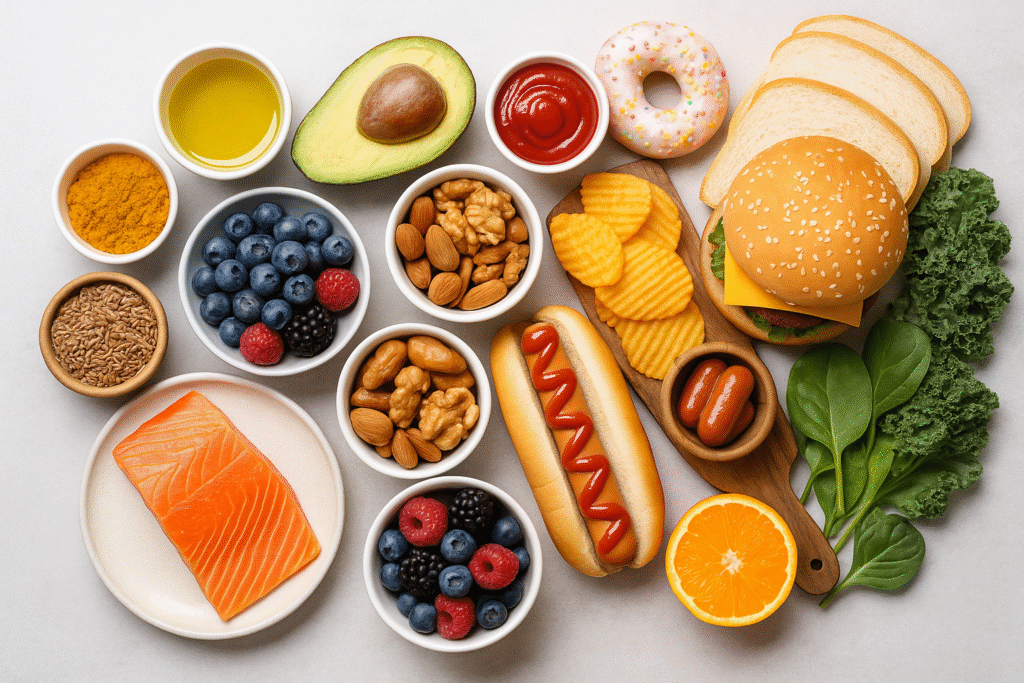
Strawberries, blueberries, raspberries, and blackberries are rich in fiber and antioxidants like anthocyanins. These compounds reduce inflammation by protecting your cells from oxidative stress.
- Leafy Greens
Spinach, kale, Swiss chard, and other dark greens contain vitamins A, C, and K, as well as plant compounds that lower inflammatory markers.
- Fatty Fish
Salmon, sardines, and mackerel are loaded with omega-3 fatty acids (EPA and DHA), which help reduce inflammation in the body and support heart and brain health.
- Nuts and Seeds
Walnuts, almonds, chia seeds, and flaxseeds contain healthy fats, protein, and magnesium — all of which support anti-inflammatory functions.
- Olive Oil
Extra virgin olive oil is one of the healthiest fats, thanks to its high content of monounsaturated fats and polyphenols. It’s a staple of the Mediterranean diet for good reason.
- Turmeric and Ginger
Both spices contain active compounds (curcumin in turmeric and gingerol in ginger) that are known for their powerful anti-inflammatory effects.
What to Avoid: Pro-Inflammatory Foods
Certain foods actually trigger inflammation, especially when consumed frequently. Limit or avoid the following:
- Refined Carbohydrates
White bread, pastries, pasta, and other ultra-processed carbs spike your blood sugar and fuel inflammatory processes in the body.
- Sugary Drinks
Sodas, sweetened teas, and energy drinks overload your system with sugar and are strongly linked to increased levels of inflammatory markers like CRP.
- Processed Meats
Sausages, bacon, ham, and hot dogs contain preservatives like nitrates and are often high in saturated fat, contributing to inflammation and oxidative stress.
- Trans Fats
Found in many packaged snacks, margarine, and baked goods, trans fats not only raise bad cholesterol but also activate inflammatory responses.
- Excess Alcohol
Heavy drinking can damage the liver and promote inflammation throughout the body. Moderate intake (or none at all) is the safer bet.
Easy Tips to Build an Anti-Inflammatory Diet
You don’t need to follow a strict plan to eat anti-inflammatory foods — small changes go a long way. Here’s how to start:
- Fill half your plate with colorful vegetables
- Use olive oil instead of butter or seed oils
- Snack on nuts and fruit instead of chips or candy
- Add ground flaxseed or chia seeds to smoothies, yogurt, or oats
- Choose whole grains like quinoa, brown rice, or oats over white rice or bread
Consistency is key. Try to make these choices most of the time — not perfectly, but regularly.
Long-Term Benefits of Reducing Inflammation
A diet low in inflammation doesn’t just improve how you feel today. Over time, it helps:
- Reduce joint and muscle pain
- Improve digestion and gut health
- Lower risk of chronic illness
- Boost mental clarity and mood
- Support weight management
Combined with regular exercise, quality sleep, and stress management, eating anti-inflammatory foods builds a strong foundation for lifelong health.